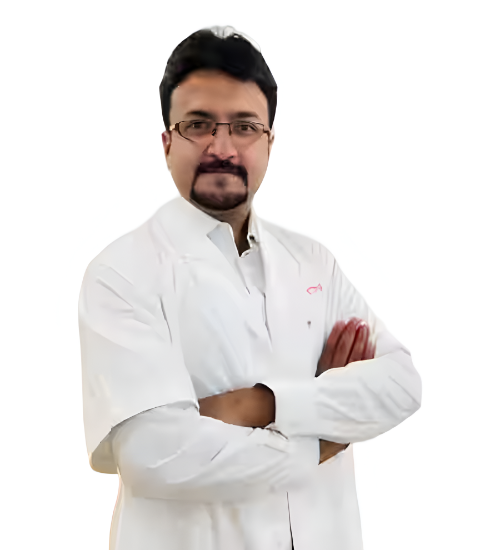
Urology consultation involves assessing urinary tract and male reproductive health conditions. Evaluation may include symptom history, physical examination, urine testing, imaging and other investigations. Dr. Shashanka Dhanuka is a qualified urologist with specialist training in urological surgery and minimally invasive techniques.
Kidney stones are hard mineral deposits that develop within the urinary system. They may cause severe flank pain, blood in the urine or urinary obstruction. Treatment depends on stone size, location and symptoms, and may include observation, medication or procedures to remove or fragment stones.
Retrograde intrarenal surgery is a minimally invasive technique used to treat selected kidney stones. A flexible instrument is passed through the natural urinary passage into the kidney, where laser energy may be used to fragment stones. Suitability depends on stone characteristics and the patient's medical condition.
PCNL is a surgical technique commonly considered for large or complex kidney stones. Instruments are introduced into the kidney through a small opening in the back to remove stone fragments. Treatment planning considers stone burden, kidney anatomy, infection risks and the patient's overall health.
Ureteroscopy uses a narrow endoscope passed through the urinary tract to examine and treat ureteric stones. Laser lithotripsy may be used to break stones into smaller fragments. The procedure is selected according to stone location, size, symptoms and the likelihood of spontaneous passage.
Benign prostatic hyperplasia is a non-cancerous enlargement of the prostate that can cause frequent urination, weak urinary flow and incomplete bladder emptying. Management may involve lifestyle measures, medicines or surgical procedures. Treatment selection depends on symptom severity and clinical findings.
Laser prostate procedures may be considered for selected patients with urinary obstruction caused by an enlarged prostate. Different techniques remove or reduce obstructing prostate tissue. Dr. Dhanuka's professional website documents a conference presentation on thulium laser prostate enucleation, supporting his academic involvement with this technique.
Uro-oncology focuses on cancers affecting the kidneys, bladder, prostate and other urinary or male reproductive organs. Evaluation may involve imaging, laboratory tests, endoscopy or biopsy. Dr. Dhanuka completed dedicated uro-oncology fellowship training at Tata Medical Center, Kolkata.
Kidney tumours may be detected during imaging for unrelated symptoms or investigated after blood in the urine or other clinical findings. Assessment considers tumour size, location, imaging characteristics and kidney function. Management may include surveillance, surgery or other specialist treatment depending on the diagnosis.
Partial nephrectomy is an operation that removes a kidney tumour while preserving suitable healthy kidney tissue. It may be considered for selected localised kidney tumours. Dr. Dhanuka completed training in retroperitoneal robotic partial nephrectomy at Royal Free Hospital, London, in 2020.
Bladder cancer may present with visible or microscopic blood in the urine, although other causes are also possible. Evaluation can involve urine investigations, imaging and cystoscopy. Treatment depends on tumour type, stage and other clinical factors, and may require coordinated uro-oncology care.
Prostate cancer evaluation considers symptoms, prostate-specific antigen results, clinical examination and individual risk factors. MRI and biopsy may be recommended when clinically indicated. Management options depend on cancer grade, stage, general health and patient preferences.
Robotic-assisted urological surgery uses surgeon-controlled instruments to perform selected minimally invasive operations. Potential applications include kidney and prostate procedures. Dr. Dhanuka has documented fellowship training in robotic urology and additional training in robotic partial nephrectomy. Procedure availability depends on hospital facilities and clinical suitability.
Laparoscopic urological surgery uses a camera and specialised instruments introduced through small incisions. It may be suitable for selected kidney and other urinary tract operations. Dr. Dhanuka completed fellowship training that included laparoscopic urology. The specific approach depends on diagnosis, anatomy and surgical assessment.
Urethral stricture is narrowing of the urethra that can cause weak urinary flow, difficulty urinating and recurrent infections. Evaluation may include flow testing, imaging and endoscopy. Urethroplasty is a reconstructive operation for selected strictures. Dr. Dhanuka has presented academic work relating to urethral reconstruction.
Renal transplantation involves replacing a failing kidney with a donated kidney. Urological assessment may be needed to evaluate urinary tract anatomy and potential surgical concerns. Dr. Dhanuka completed hands-on surgical training in renal transplantation in Kolkata in 2018. His current transplant operating role requires confirmation.