R
Rahul
VerifiedKolkata • Robotic Partial Nephrectomy
Helpful Explanation of Robotic Surgery
The robotic procedure, expected hospital stay and recovery process were explained clearly. Dr. Gaurav Aggarwal answered all our questions before treatment.

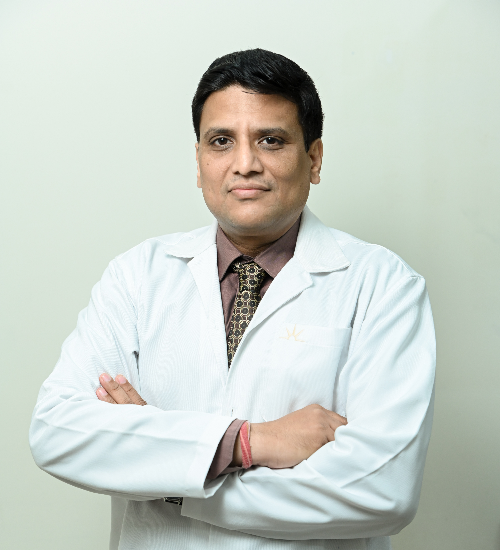
Urology
Uro-Oncologist, Urologist & Robotic Surgeon20+ Years of Experience in Urology, Uro-Oncology, Robotic Surgery and Minimally Invasive Urological Surgery.
HCG Cancer Hospital
Kolkata
Dr. Gaurav Aggarwal is an experienced Uro-Oncologist, Urologist and Robotic Surgeon in Kolkata with more than 20 years of clinical experience. He specialises in the diagnosis and surgical treatment of cancers affecting the prostate, kidney, bladder and other organs of the urinary system.
He completed his MBBS from Maharashtra University of Health Sciences, Nashik, followed by MS in General Surgery from Devi Ahilya Vishwavidyalaya, Indore, where he received academic distinction and a Gold Medal. He subsequently completed advanced Fellowship training in Surgical Oncology at Tata Medical Centre, Kolkata, and DNB in Urology from the National Board of Examination.
Dr. Gaurav Aggarwal has extensive experience in uro-oncology and minimally invasive urological surgery. His areas of expertise include prostate cancer, kidney cancer, bladder cancer, adrenal tumors and other genitourinary cancers.
He has a special interest in robotic surgery, which allows selected complex urological cancer procedures to be performed through smaller incisions with enhanced precision. His robotic surgical expertise includes radical prostatectomy, partial nephrectomy and radical cystectomy.
Dr. Aggarwal also performs laparoscopic and minimally invasive procedures for urological cancers and provides comprehensive treatment planning based on cancer stage, tumor characteristics, patient health and functional considerations.
His approach to uro-oncology focuses on achieving appropriate cancer control while preserving urinary, renal and sexual function wherever clinically possible. He works as part of a multidisciplinary oncology team to provide individualized and evidence-based cancer care.
Prostate cancer treatment depends on disease stage, tumor characteristics, PSA levels and overall patient health. Surgical treatment may include robotic-assisted radical prostatectomy in appropriately selected patients.
Robotic radical prostatectomy involves removing the prostate gland using robot-assisted minimally invasive techniques. The approach allows precise dissection and may support nerve preservation and faster recovery in suitable patients.
Kidney cancer treatment is planned according to tumor size, location, stage and kidney function. Surgery may involve partial nephrectomy or radical nephrectomy depending on the extent of disease.
Robotic partial nephrectomy removes the kidney tumor while preserving as much healthy kidney tissue as possible. It may be suitable for selected localized kidney cancers.
Radical nephrectomy involves removal of the affected kidney and may be recommended for larger or more advanced kidney tumors when kidney-preserving surgery is not suitable.
Bladder cancer treatment depends on whether the disease is superficial or muscle invasive and may include TURBT, radical cystectomy, chemotherapy, immunotherapy or combinations of these approaches.
Transurethral resection of bladder tumor is an endoscopic procedure used to remove and assess bladder tumors through the urinary passage without an external incision.
Radical cystectomy involves removal of the urinary bladder for selected invasive or recurrent bladder cancers and may be performed using open or robotic-assisted surgical techniques.
Nephroureterectomy involves removal of the kidney and ureter and is commonly used for selected cancers involving the renal pelvis or ureter.
Adrenal cancer surgery involves removal of the affected adrenal gland when the tumor is localized and surgically resectable. Minimally invasive techniques may be considered for selected patients.
Robotic urological surgery uses advanced robotic systems to perform complex procedures through smaller incisions with enhanced visualization and surgical precision.
Laparoscopic urological surgery uses small incisions and specialized instruments to treat selected kidney, prostate, adrenal and urinary tract conditions while potentially reducing postoperative recovery time.
Retroperitoneal lymph node dissection involves removal of lymph nodes from the area behind the abdominal cavity and may be required in selected urological cancers for staging or treatment.
Video endoscopic inguinal lymphadenectomy is a minimally invasive technique used to remove selected groin lymph nodes while reducing the size of surgical incisions compared with traditional open surgery.
MBBS, MS (General Surgery), DNB (Urology), Fellowship in Surgical Oncology
Prostate Cancer Treatment, Kidney Cancer Treatment, Bladder Cancer Treatment, Adrenal Cancer Treatment, Testicular Cancer Treatment, Penile Cancer Treatment, Robotic Urological Surgery
Genuine patient experiences and treatment feedback.
Quick answers to common questions about Dr. Gaurav Aggarwal
Dr. Gaurav Aggarwal is a Uro-Oncologist, Urologist and Robotic Surgeon in Kolkata with expertise in the diagnosis and treatment of urological cancers.
Dr. Gaurav Aggarwal specialises in Uro-Oncology and Urology, with particular expertise in robotic and minimally invasive surgery for prostate, kidney and bladder cancers.
Dr. Gaurav Aggarwal holds MBBS, MS in General Surgery, Fellowship in Surgical Oncology, DNB in Urology and FAGE qualifications.
Dr. Gaurav Aggarwal has more than 20 years of experience in urology and uro-oncology.
He practices at HCG Cancer Hospital, New Town, Kolkata, along with selected clinics in New Town, Salt Lake and central Kolkata.
Contact us for personalized help or to schedule an appointment.