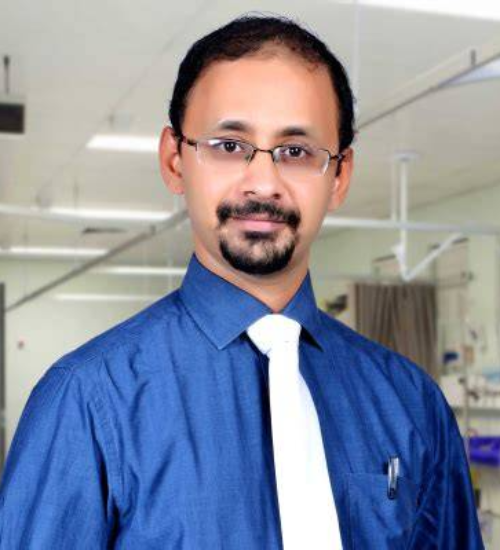
Dr. Manan Gujarathi - Consultant – Orthopaedics and Joint Replacement Surgery

Dr. Manan Gujarathi – Orthopaedic and Joint Replacement Surgeon in Kalyan

Orthopedic

12 years

Fortis Hospitals, Kalyan, Mumbai
5.0★★★★★3 reviews

Dr. Manan Gujarathi – Orthopaedic and Joint Replacement Surgeon in Kalyan

Dr. Manan Gujarathi is a Consultant Orthopaedic and Joint Replacement Surgeon associated with Fortis Hospital, Kalyan, and OMEGA Clinic in Dombivli. His areas of expertise include hip and knee replacement surgery, arthroscopy, fracture management, and the assessment of degenerative joint disorders. He focuses on selecting appropriate medical, rehabilitative, and surgical treatment based on individual patient requirements.

Dr. Gujarathi completed his MBBS at Pravara Institute of Medical Sciences, Loni, followed by a Diploma in Orthopaedics in 2010 and DNB in Orthopaedics in 2012. He subsequently received specialized fellowship training in hip and knee replacement surgery under experienced surgeons in Germany, South Korea, and Mumbai.

His documented procedures include total knee replacement, partial knee replacement, primary total hip replacement, and partial hip replacement. These operations may be considered for patients with severe joint damage, selected fractures, or mobility limitations that have not responded adequately to appropriate non-surgical treatment.

His orthopaedic practice also includes treatment of fractures and dislocations, using anatomical or minimally invasive fixation techniques when indicated. Joint pain, osteoarthritis, neck pain, back pain, and shoulder conditions are also assessed. Treatment planning considers clinical examination, imaging findings, functional limitations, and rehabilitation requirements.

Through OMEGA Clinic in Dombivli and his association with Fortis Hospital, Kalyan, Dr. Gujarathi provides orthopaedic consultation, surgical assessment,

Other Information

Total Knee Replacement

Total knee replacement is a surgical procedure used to replace damaged joint surfaces with artificial components. It may be considered for patients with advanced knee arthritis, persistent pain and restricted mobility despite appropriate non-surgical treatment. Rehabilitation is an important part of postoperative recovery.

Partial Knee Replacement

Partial knee replacement involves replacing only the damaged compartment of the knee while preserving healthy joint structures. It may be suitable for selected patients with arthritis confined to one area. Clinical examination and imaging help determine whether partial replacement is appropriate.

Total Hip Replacement

Total hip replacement involves replacing damaged portions of the hip joint with artificial components. It may be recommended for advanced arthritis, certain fractures or other severe hip conditions. Treatment planning considers symptoms, imaging, functional limitations and individual surgical risks.

Partial Hip Replacement

Partial hip replacement, also called hemiarthroplasty, replaces the femoral head while preserving the natural hip socket. It is commonly considered for certain hip fractures, particularly in older adults. Suitability depends on fracture type, functional needs and overall health.

Knee Osteoarthritis Management

Knee osteoarthritis is a degenerative joint condition that may cause pain, stiffness, swelling and difficulty walking. Management includes exercise, weight management, medication and rehabilitation. Joint replacement may be considered when symptoms remain severe despite appropriate conservative treatment.

Hip Arthritis Management

Hip arthritis may cause groin pain, stiffness and limitations in walking or everyday movement. Orthopaedic assessment includes examination and imaging to evaluate joint damage. Treatment may involve physiotherapy, medication or hip replacement surgery in advanced cases.

Knee Arthroscopy

Knee arthroscopy is a minimally invasive procedure in which a camera and small instruments are introduced into the knee joint. It may be used to assess or treat selected injuries or joint conditions. Arthroscopy is not routinely recommended for uncomplicated degenerative knee arthritis.

Complex Fracture Treatment

Complex fractures may involve multiple bone fragments, joint surfaces or surrounding soft tissues. Treatment requires detailed assessment and may include surgical fixation with plates, screws or other implants. The approach depends on fracture stability, anatomical location and patient-specific factors.

Minimally Invasive Fracture Fixation

Minimally invasive fracture fixation uses specialized techniques to stabilize selected broken bones while limiting unnecessary disruption of surrounding tissues. The procedure may involve carefully positioned implants and imaging guidance. Suitability depends on the fracture pattern and surgical requirements.

Dislocation Management

A joint dislocation occurs when the bones forming a joint move out of their normal alignment. Management may require prompt reduction, examination for associated injuries and temporary immobilization. Some complicated injuries need surgical treatment or additional imaging.

Joint Pain Assessment

Joint pain may develop because of arthritis, injuries, inflammation or other musculoskeletal conditions. Assessment includes reviewing symptoms, examining the affected joint and selecting investigations when necessary. Treatment depends on the underlying cause and the degree of functional limitation.

Joint Replacement Consultation

A joint replacement consultation evaluates whether surgery may provide meaningful benefit for severe joint damage. The surgeon reviews medical history, imaging, mobility and previous treatments. Available surgical approaches, possible complications and rehabilitation requirements are discussed before treatment decisions.

Orthopaedic Trauma Management

Orthopaedic trauma management focuses on injuries affecting bones, joints, ligaments and related structures. Treatment may include immobilization, fracture reduction, surgical stabilization and rehabilitation. The appropriate approach depends on injury severity, anatomical involvement and overall health.

Rehabilitation After Joint Replacement

Rehabilitation following joint replacement supports recovery of strength, movement and functional independence. Programmes generally involve physiotherapy, walking exercises, gradual activity progression and monitoring for complications. Rehabilitation plans are adapted to the type of surgery and individual recovery.

Education & Qualifications

MBBS, Diploma in Orthopaedics, DNB (Orthopaedics)

Services

Total Knee Replacement, Partial Knee Replacement, Total Hip Replacement, Partial Hip Replacement, Knee Osteoarthritis Management, Hip Arthritis Management, Fracture Fixation, Complex Fracture Treatment, Arthroscopy, Joint Pain Evaluation, Frozen Shoulder Assessment, Orthopaedic Rehabilitation Planning

Patient Testimonials

What Patients Say About Dr. Manan Gujarathi

Genuine patient experiences and treatment feedback.

5.0
3 reviews
H

Hemant Sathe

Verified

Salt Lake • Orthopaedic Consultation

5.0

Satisfied With Diagnosis and Treatment

I had a very good experience consulting Dr. Manan Gujarathi. I was satisfied with his diagnosis and the medication and treatment recommended during my consultation. I appreciated the overall care.

K

Kisan Pawar

Verified

Bangalore • Bilateral Knee Replacement

5.0

Positive Experience With Knee Replacement Surgery

My mother underwent replacement of both knees under Dr. Manan Gujarathi in October 2025. I was pleased with the result and appreciated the treatment she received. Based on our family's experience, I would recommend him to patients considering knee replacement surgery.

P

Pranali Bhat

Verified

Barasat • Joint Pain Consultation

5.0

Patient and Supportive Joint Care

I visited Dr. Manan Gujarathi because joint pain was affecting my daily routine. I was nervous before the consultation, but he was soft-spoken and patient with my questions. He recommended only the treatment he considered necessary. I appreciated his approach, and I was able to move better after treatment.

Frequently Asked Questions

Quick answers to common questions about Dr. Manan Gujarathi

01

When is total knee replacement recommended?

Total knee replacement may be recommended for severe knee arthritis causing persistent pain and difficulty with daily activities when appropriate non-surgical treatment no longer provides sufficient relief.

02

What is the difference between partial and total knee replacement?

Partial knee replacement treats a limited damaged area of the joint, whereas total knee replacement replaces the principal joint surfaces. Eligibility depends on the location and extent of arthritis.

03

How long does recovery after hip replacement take?

Recovery varies according to age, medical condition, surgical approach and rehabilitation. Walking may begin relatively early, while strength and functional improvements continue over subsequent weeks and months.

04

Can knee arthritis be managed without surgery?

Yes. Exercise, physiotherapy, weight management, medication and other appropriate treatments may help control symptoms. Surgery is considered when advanced disease causes substantial limitations.

05

When does a fracture require surgical fixation?

Surgery may be necessary for displaced, unstable, open or complicated fractures. The decision depends on imaging findings and the patient's overall condition.

Still have questions about Dr. Dr. Manan Gujarathi?

Contact us for personalized help or to schedule an appointment.