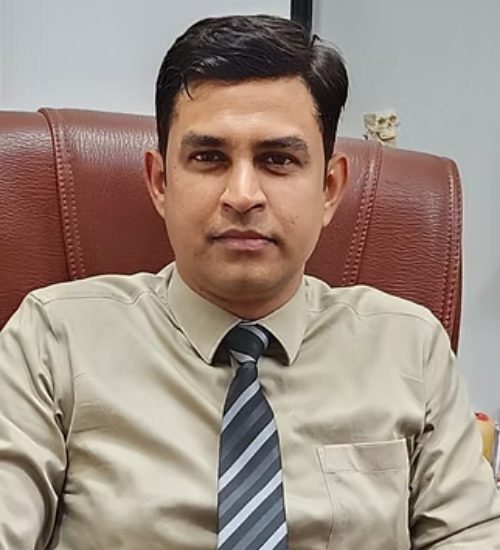
Dr. Vinay Kumaraswamy provides orthopedic consultations and surgical care for conditions affecting bones, joints, ligaments and muscles. His specialist interests include arthroscopy, joint replacement, sports medicine and complex joint trauma.
Knee replacement surgery may be recommended for patients with advanced knee arthritis, persistent joint pain and limited mobility. The procedure replaces damaged knee joint surfaces with artificial components to improve movement and reduce pain.
Total knee replacement involves resurfacing severely damaged knee joint surfaces with prosthetic components. It may be suitable when non-surgical treatments no longer provide sufficient relief from arthritis-related pain and stiffness.
Joint replacement surgery aims to restore mobility and reduce pain in severely damaged joints. Treatment is selected according to the affected joint, degree of degeneration and the patient's overall health.
Knee arthroscopy is a minimally invasive surgical technique used to diagnose and treat selected problems within the knee joint. It may be used for meniscus injuries, cartilage disorders and certain ligament-related conditions.
Shoulder arthroscopy uses a small camera and specialized instruments to examine and treat selected shoulder conditions through small incisions. It may be considered for shoulder instability, tendon injuries and certain internal joint disorders.
ACL reconstruction is used to restore knee stability after selected anterior cruciate ligament injuries. Surgery may be considered when the knee remains unstable, especially in patients participating in demanding sports or physical activities.
Posterior cruciate ligament injuries can cause pain, swelling and instability of the knee. Treatment may involve bracing, physiotherapy and rehabilitation, while selected severe injuries may require reconstruction.
Meniscus tears may cause knee pain, swelling, locking and difficulty bending the joint. Management depends on the tear pattern and symptoms and may include rehabilitation or arthroscopic surgery.
Meniscus repair surgery aims to preserve damaged meniscal tissue when the tear is suitable for healing. Arthroscopic techniques may be used depending on the tear location, tissue condition and individual medical factors.
Dr. Vinay Kumaraswamy has specialized fellowship training in arthroscopy and sports medicine. Sports injury assessment may include ligament tears, cartilage injuries, shoulder problems and joint instability.
Ligament injuries commonly affect the knee, shoulder and ankle. Treatment depends on the severity of ligament damage and may involve physiotherapy, bracing, activity modification or surgical reconstruction.
Rotator cuff tears affect the tendons surrounding the shoulder joint and may cause pain, weakness and restricted movement. Treatment may include rehabilitation, medication and surgical repair for selected patients.
Shoulder instability occurs when the shoulder joint becomes excessively loose or repeatedly dislocates. Treatment may involve strengthening exercises, rehabilitation or arthroscopic stabilization surgery depending on the condition.
Shoulder surgery may be considered for selected rotator cuff tears, recurrent dislocations, cartilage injuries and other structural problems. The surgical approach depends on clinical examination and imaging findings.
Elbow replacement involves replacing damaged portions of the elbow joint with artificial components. Dr. Vinay Kumaraswamy lists elbow replacement among his areas of expertise. The procedure may be considered for selected advanced joint conditions or complex injuries.
Complex joint trauma includes severe fractures and injuries affecting the joint surface, surrounding bones and ligaments. Treatment may require surgical stabilization, joint reconstruction and structured rehabilitation.
Fracture management focuses on restoring bone alignment, supporting healing and recovering normal movement. Treatment may include casts, braces, surgical fixation and physiotherapy depending on the injury.
Joint cartilage injuries may cause pain, swelling and restricted mobility. Treatment can include activity modification, physiotherapy and selected arthroscopic or reconstructive procedures depending on the defect.
Knee pain can result from arthritis, meniscus injuries, ligament damage or overuse. Orthopedic assessment helps determine whether medication, rehabilitation, injections or surgery may be appropriate.
Joint pain and arthritis management aims to reduce discomfort, maintain movement and support daily activities. Treatment options may include medication, exercise therapy, rehabilitation and joint replacement surgery for selected advanced cases.
Sports injury rehabilitation focuses on recovering joint stability, muscular strength, mobility and functional performance after injury or surgery. Rehabilitation plans are selected according to the injury and the patient's physical activity goals.