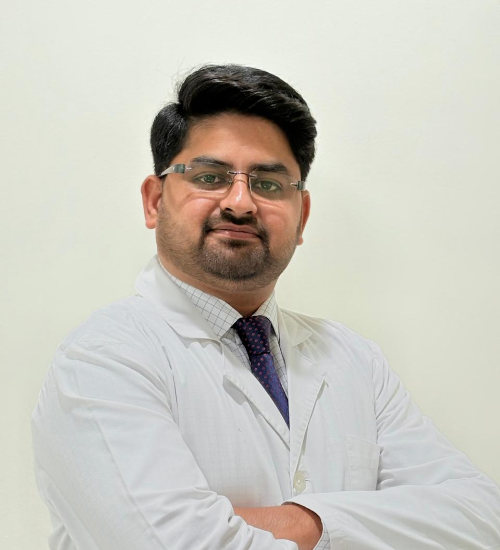
Dr. Vikas Chavan specializes in the evaluation and surgical management of selected spinal conditions. His areas of expertise include minimally invasive spine procedures, degenerative spine disorders, spinal trauma and nerve compression conditions.
Minimally invasive spine surgery uses specialized instruments and smaller surgical approaches to treat selected spinal disorders. Dr. Vikas Chavan has fellowship training and clinical expertise in minimally invasive spine procedures.
Lumbar spinal canal stenosis occurs when narrowing of the spinal canal compresses nerves in the lower back. Symptoms may include leg pain, numbness, weakness and difficulty walking. Treatment may involve physiotherapy, medication or decompression surgery.
Spinal decompression surgery aims to relieve pressure on compressed spinal nerves. The procedure may be considered for selected patients with spinal stenosis, persistent radiating pain or neurological symptoms that do not improve with appropriate conservative treatment.
Minimally invasive tubular decompression uses specialized retractors and instruments to access compressed spinal nerves through a smaller surgical approach. Dr. Vikas Chavan has presented academic work involving tubular decompression for lumbar canal stenosis.
A slipped or herniated disc may compress nearby nerves and cause back pain, sciatica, numbness or muscle weakness. Treatment options include medication, physiotherapy, selected injections and surgery when clinically indicated.
Lumbar disc herniation occurs when spinal disc material extends beyond its normal position and may irritate or compress nearby nerves. Management depends on symptom severity, neurological findings and imaging results.
Sciatica causes pain that may radiate from the lower back through the buttock and leg. It can result from disc herniation or other conditions affecting spinal nerves. Treatment is directed toward the underlying cause.
Cervical spondylosis involves degenerative changes in the neck region of the spine. Symptoms may include neck pain, stiffness and radiating arm discomfort. Management may include physiotherapy, medication and surgery for selected cases involving significant nerve compression.
Lumbar spondylosis involves degenerative changes affecting the lower spine. Treatment may include exercise therapy, posture guidance, medication and selected spinal procedures based on clinical findings.
Degenerative spinal disorders may involve disc degeneration, spinal stenosis, arthritic changes or nerve compression. Dr. Vikas Chavan lists the management of degenerative spine disorders among his clinical interests.
Spondylolisthesis occurs when one vertebra slips forward relative to another. Treatment depends on spinal stability, nerve compression and symptoms and may include physiotherapy or surgical stabilization for selected patients.
Spinal fusion surgery joins selected vertebrae to improve stability in appropriate cases. It may be considered for certain spinal deformities, instability or degenerative conditions following specialist assessment.
Oblique Lumbar Interbody Fusion is a spinal fusion technique that approaches the lumbar spine through an oblique pathway. Dr. Vikas Chavan has presented academic work involving OLIF, although current procedural availability should be confirmed.
Selective nerve root blocks involve delivering medication near a specific spinal nerve under imaging guidance. These injections may be used to help evaluate or manage selected cases of nerve-related pain. Dr. Vikas Chavan lists selective nerve root blocks among his areas of expertise.
Spine trauma surgery may be required for selected fractures or injuries affecting spinal stability and neurological function. Treatment depends on the location, severity and associated spinal cord or nerve involvement.
Dr. Vikas Chavan has experience in managing simple and complex orthopedic trauma. Treatment may involve fracture stabilization, surgical fixation and rehabilitation to restore mobility and function.
Complex fractures may involve displaced bone fragments, joint surfaces or surrounding soft tissues. Management may require detailed imaging, surgical fixation and structured rehabilitation depending on injury severity.
Fracture fixation surgery uses plates, screws, nails or other implants to stabilize broken bones when necessary. The treatment aims to support proper bone alignment and healing.
An infected non-union occurs when a fracture fails to heal and infection is present. Treatment may require infection control, removal of unhealthy tissue, stabilization and additional procedures to support bone healing.
Hip arthroplasty involves replacing damaged hip joint surfaces with artificial components. Dr. Vikas Chavan lists hip arthroplasty among his orthopedic interests. The procedure may be considered for severe arthritis or selected hip injuries.
Knee arthroplasty involves replacing damaged knee joint surfaces to improve mobility and reduce pain. Treatment may be considered for selected patients with advanced arthritis and persistent functional limitations.
Osteoporosis weakens bones and increases fracture risk. Orthopedic assessment may involve fracture risk evaluation, bone density investigations, medical treatment and fall prevention strategies.
Chronic lower back pain may result from muscle-related conditions, disc degeneration, spinal stenosis or other causes. Treatment may include exercise therapy, medication, physiotherapy and specialist procedures for selected conditions.
Neck pain may be associated with muscle strain, cervical disc problems or degenerative spinal conditions. Assessment helps identify the cause and determine whether conservative treatment or further investigations are necessary.