Gastrointestinal cancer surgery involves treatment of cancers affecting the stomach, colon, rectum and other digestive organs. Surgical planning depends on tumor location, disease stage and involvement of surrounding structures.
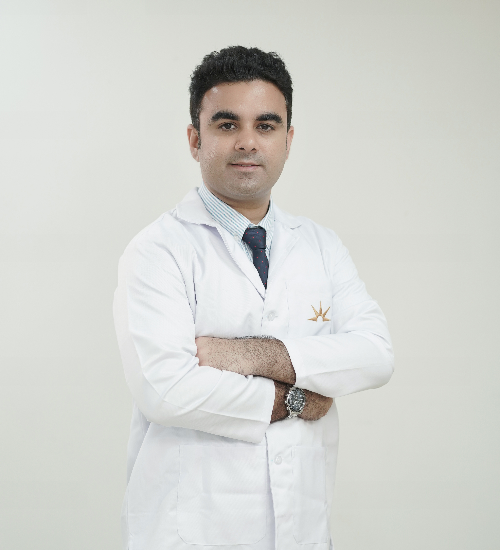
GI-HPB surgery focuses on complex cancers involving the gastrointestinal tract, liver, pancreas and biliary system. Dr. Karan Sehgal has dedicated fellowship training in this specialised area.
Pancreatic cancer surgery may involve complex pancreatic resections in selected patients with operable disease. Treatment planning depends on tumor location, blood vessel involvement and overall patient fitness.
Liver cancer surgery may involve removal of the tumor-bearing portion of the liver when disease is localised and adequate healthy liver tissue can be preserved.
Gallbladder cancer surgery may include removal of the gallbladder with adjacent liver tissue and regional lymph nodes depending on disease stage and tumor spread.
Bile duct cancer surgery aims to remove the affected bile duct and surrounding tissues when the disease is surgically resectable, with the procedure selected according to tumor location.
Stomach cancer surgery may involve partial or total removal of the stomach along with nearby lymph nodes depending on tumor location, stage and overall patient condition.
Colorectal cancer surgery involves removal of the affected segment of the colon or rectum along with regional lymph nodes, with open, laparoscopic or robotic techniques considered according to the individual case.
Rectal cancer surgery requires precise removal of the tumor while preserving bowel and pelvic function wherever possible. Robotic surgery can be beneficial in selected tumors located deep within the pelvis.
Robotic colorectal surgery uses advanced robotic technology to provide enhanced visualisation and precision during selected colon and rectal cancer operations.
Breast cancer surgery may include breast-conserving surgery or mastectomy depending on tumor size, location, stage and patient preference.
Breast-conserving surgery removes the breast tumor with an appropriate margin of healthy tissue while preserving most of the breast whenever oncologically suitable.
Mastectomy involves removal of breast tissue and may be recommended for selected patients based on cancer size, distribution, genetic risk or previous treatment.
Oncoplastic breast surgery combines cancer removal with reconstructive techniques to help maintain breast shape and appearance while achieving appropriate cancer clearance.
Robotic surgery allows selected complex cancer operations to be performed through smaller incisions with enhanced three-dimensional visualisation and instrument precision.
Transoral robotic surgery uses robotic instruments introduced through the mouth to access selected head and neck tumors without requiring large external incisions.
Minimally invasive cancer surgery uses laparoscopic or robotic techniques to perform selected cancer operations through smaller incisions, potentially supporting faster postoperative recovery.
HIPEC involves circulating heated chemotherapy within the abdominal cavity after surgical removal of visible tumor deposits and may be considered for selected cancers involving the peritoneum.
His current HCG profile specifically confirms GI-HPB Surgery, Breast Oncology, robotic surgery expertise and Surgical Oncology practice at HCG Cancer Hospital, Kolkata.