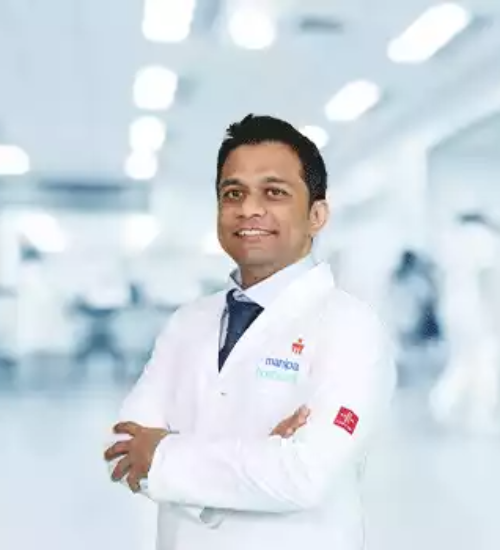
Robotic cancer surgery uses surgeon-controlled instruments and advanced visualisation to perform selected complex oncological procedures. Dr. Pavan Sugoor has documented experience in robotic surgical oncology, including colorectal cancer surgery. The choice between robotic, laparoscopic and open surgery depends on cancer stage, tumour location, surgical complexity and patient suitability.
Laparoscopic cancer surgery uses specialised instruments introduced through small incisions. Dr. Pavan Sugoor has experience in minimally invasive operations for selected gastrointestinal and pelvic cancers. Depending on the procedure and patient, laparoscopic surgery may reduce postoperative discomfort, although it is not suitable for every tumour or cancer stage.
Colon cancer surgery involves removing the cancerous segment of the large intestine together with appropriate surrounding tissue and lymph nodes. Dr. Pavan Sugoor specialises in gastrointestinal and colorectal surgical oncology. Surgical planning considers tumour location, staging investigations, general health and whether additional cancer treatment is required.
Rectal cancer treatment may involve surgery, chemotherapy, radiotherapy or a combination of approaches. Dr. Pavan Sugoor has documented expertise in rectal cancer surgery, including robotic total mesorectal excision and selected sphincter-preserving operations. The treatment plan depends on tumour stage, location and multidisciplinary assessment.
Sphincter-preserving surgery aims to remove selected rectal cancers while retaining anal sphincter function when oncologically safe. Dr. Pavan Sugoor's published surgical work includes intersphincteric resection and other advanced rectal cancer techniques. Whether bowel continuity can be preserved depends on tumour anatomy, treatment response and surgical margins.
Total mesorectal excision is a specialised operation for rectal cancer that removes the affected rectum and surrounding mesorectal tissue according to cancer surgery principles. Dr. Pavan Sugoor has published research involving robotic TME. Surgical approach and additional treatment are determined through appropriate staging and multidisciplinary evaluation.
Surgery for stomach cancer may involve removal of part or all of the stomach with appropriate lymph node assessment. Dr. Pavan Sugoor has fellowship training in gastric cancer surgery and experience in gastrointestinal oncology. Treatment selection depends on cancer location, stage, patient fitness and the potential need for systemic therapy.
Oesophageal cancer surgery may be considered for selected cancers affecting the food pipe. Dr. Pavan Sugoor completed specialised training in oesophageal cancer surgery in Tokyo. Treatment often involves multidisciplinary assessment and may include chemotherapy or radiotherapy before surgery, depending on the tumour and stage.
Dr. Pavan Sugoor's documented expertise includes breast and oncoplastic cancer surgery. Surgical options may include breast-conserving procedures or mastectomy, depending on cancer characteristics and patient preferences. Oncoplastic techniques combine cancer removal with reconstructive principles to preserve breast appearance when clinically appropriate.
Sentinel lymph node biopsy helps assess whether selected cancers, particularly breast cancers, have spread to the first draining lymph nodes. Dr. Pavan Sugoor lists this procedure among his breast oncology expertise. The need for lymph node assessment depends on cancer type, clinical findings and current treatment guidelines.
Gynaecological cancer surgery may involve treatment of selected ovarian, uterine, cervical or other pelvic malignancies. Dr. Pavan Sugoor's official profile includes pelvic and gynaecological surgical oncology. Complex cases are assessed through a multidisciplinary team, with surgery planned according to cancer stage, anatomy and the patient's overall condition.
Hepatopancreatobiliary cancer surgery addresses selected malignancies affecting the liver, pancreas, gallbladder and bile ducts. Dr. Pavan Sugoor's official expertise includes this area of surgical oncology. Treatment may involve complex surgery, systemic treatment or other interventions, with decisions guided by imaging, disease stage and specialist team review.
Thoracic surgical oncology includes selected cancers involving the lungs and structures within the chest. Dr. Pavan Sugoor has documented thoracic oncology expertise and international training in uniportal video-assisted thoracic surgery. Treatment depends on the cancer's type, stage, location and the patient's respiratory and general health.
Cytoreductive surgery removes visible tumour deposits from selected abdominal surfaces. HIPEC involves circulating heated chemotherapy within the abdomen during surgery in carefully selected cases. Dr. Pavan Sugoor's official profile includes expertise in cytoreduction and HIPEC. These complex procedures require detailed evaluation of disease extent, expected benefit and procedural risks.
PIPAC is a specialised technique that delivers aerosolised chemotherapy into the abdominal cavity under pressure for selected peritoneal malignancies. Dr. Pavan Sugoor lists PIPAC among his areas of expertise. Its role varies by cancer type and treatment setting, and availability should be confirmed with the treating oncology team.
Pelvic exenteration is a complex operation considered for carefully selected locally advanced or recurrent pelvic cancers. Dr. Pavan Sugoor has documented research and experience involving minimally invasive pelvic exenteration. The operation requires extensive assessment of tumour involvement, surgical feasibility, potential complications and expected quality-of-life effects.
Fluorescence-guided surgery uses specialised imaging agents and cameras to help visualise selected anatomical structures during an operation. Dr. Pavan Sugoor's official profile includes fluorescence-guided surgical oncology. The technique may assist surgical planning and tissue identification in appropriate procedures but does not replace standard cancer surgery principles.
Thyroid cancer surgery may involve removing part or all of the thyroid gland and assessing nearby lymph nodes when indicated. Dr. Pavan Sugoor lists thyroid cancer among his surgical oncology interests. Treatment depends on tumour type, size, extent, risk assessment and coordination with endocrine and oncology specialists.